A Christian school of health for every family
Book Consult
Sample Week · K & 1st Grade

How the Quintivium Builds

A free open sample of the real curriculum: Week 1 of Volume I (Kindergarten) and Week 1 of Volume II (1st Grade). One week introduces the body as gift. The next year teaches the eye. The twelve-year argument — already at work in the first week of each volume.

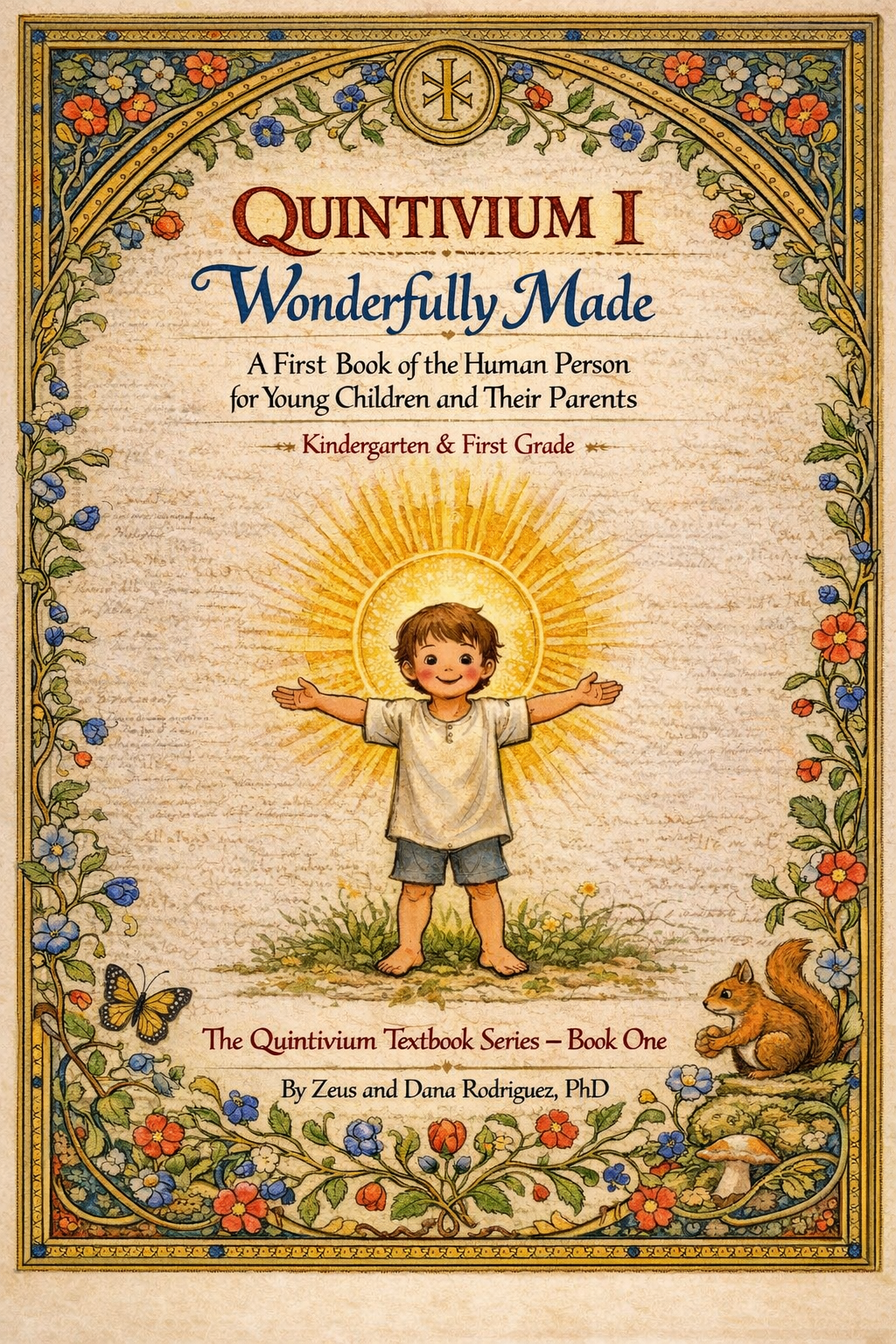
Quintivium Vol. I: Wonderfully Made — Kindergarten cover Vol. I · Wonderfully Made · Kindergarten
II The Quintivium · Vol. II

My Body, God's Design

1st Grade
The Eleven Systems, Wondered Upon
by Zeus Rodriguez
& Prof. Dana Rodriguez, PhD
Forthcoming
Vol. II · My Body, God's Design · 1st Grade
Child in a meadow
The Body
as Gift
Child looking at hands
Eyes to See,
Hands to Make
Child and sparrow
Creation
Attended To
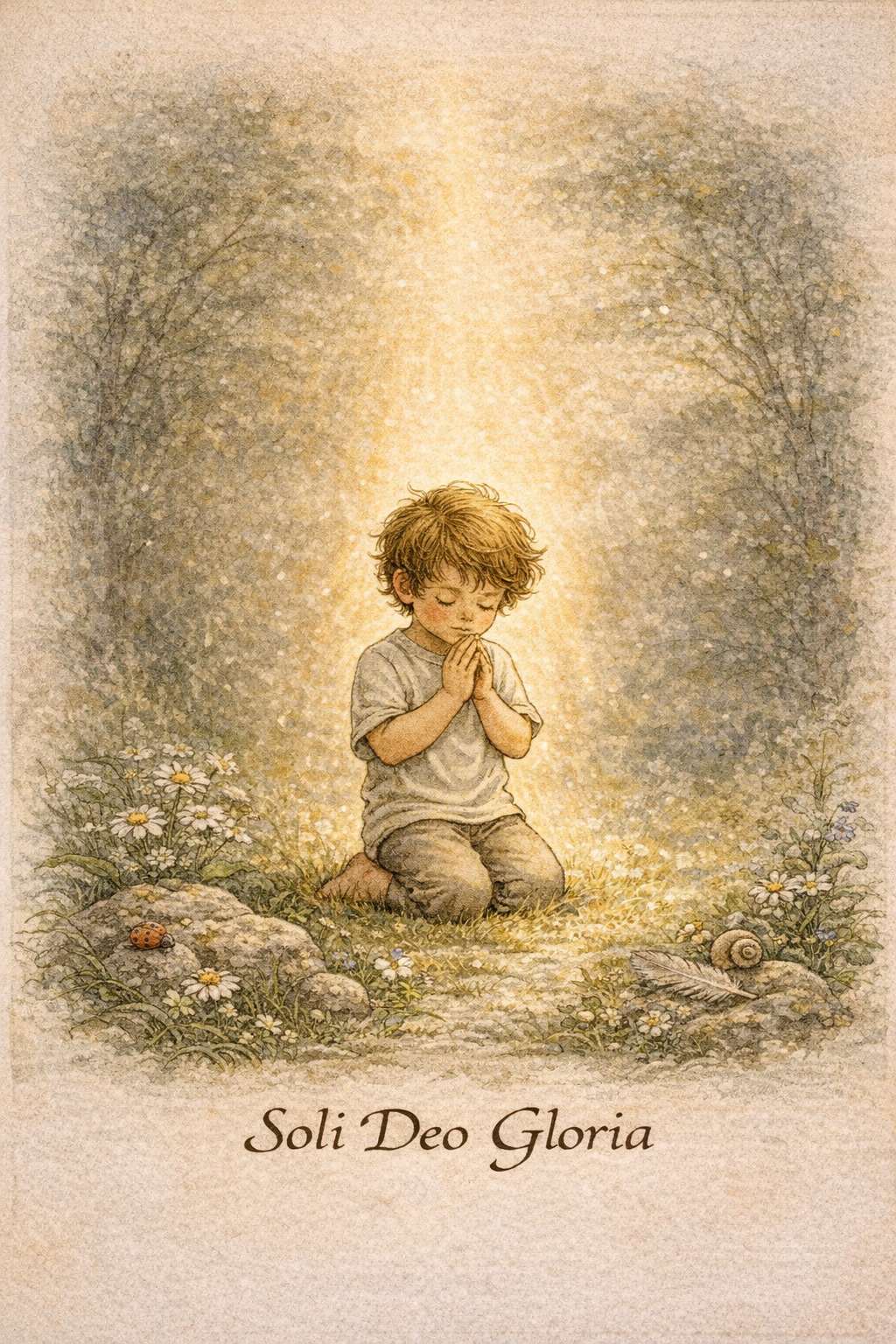
Child with Soli Deo Gloria
Soli Deo
Gloria
A Note from the Author

A kindergartner cannot read Aquinas — but a kindergartner can already notice that she has hands, and that her hands are for something. Below is an open sample of the actual curriculum: the complete Week 1 of the Kindergarten volume, and the complete Week 1 of the 1st Grade volume. The kindergartener meets the whole body at once: head, trunk, limbs, and the claim that they were given as a gift. The first grader returns the next year to look more closely at a single organ — the eye — and learn what the pupil and the retina do, so that the word “wonderfully made” begins to carry weight. By eighth grade the same student is reading Theology of the Body. She starts here.

Volume I · Kindergarten · Week 1 of 36

My Body Is a Gift from God

Unit I: God Made Me. The whole body, named and wondered upon. Scripture, the Latin word Pater, and gratitude for a physical form.

K

The Textbook Story

God Made You Special

From the storybook. This is what the child reads (or is read to her) this week.

Have you ever looked in the mirror and thought about how amazing you are? God created you with great love and care. Your body is a special gift from God, and it is truly wonderful!

The Parts of Your Body

Your body has many different parts, and each one has an important job to do. Let us learn about some of the parts of your body.

Your Head

At the very top of your body is your head. Your head holds your brain, which is like the captain of a ship — it tells every other part of your body what to do! Your head also has your eyes for seeing, your ears for hearing, your nose for smelling, and your mouth for tasting and speaking.

Your Trunk

The middle part of your body is called your trunk. Inside your trunk, God has placed your heart, which beats all day and all night to keep you alive. Your lungs help you breathe in fresh air. Your tummy helps break down the food you eat so your body can use it for energy.
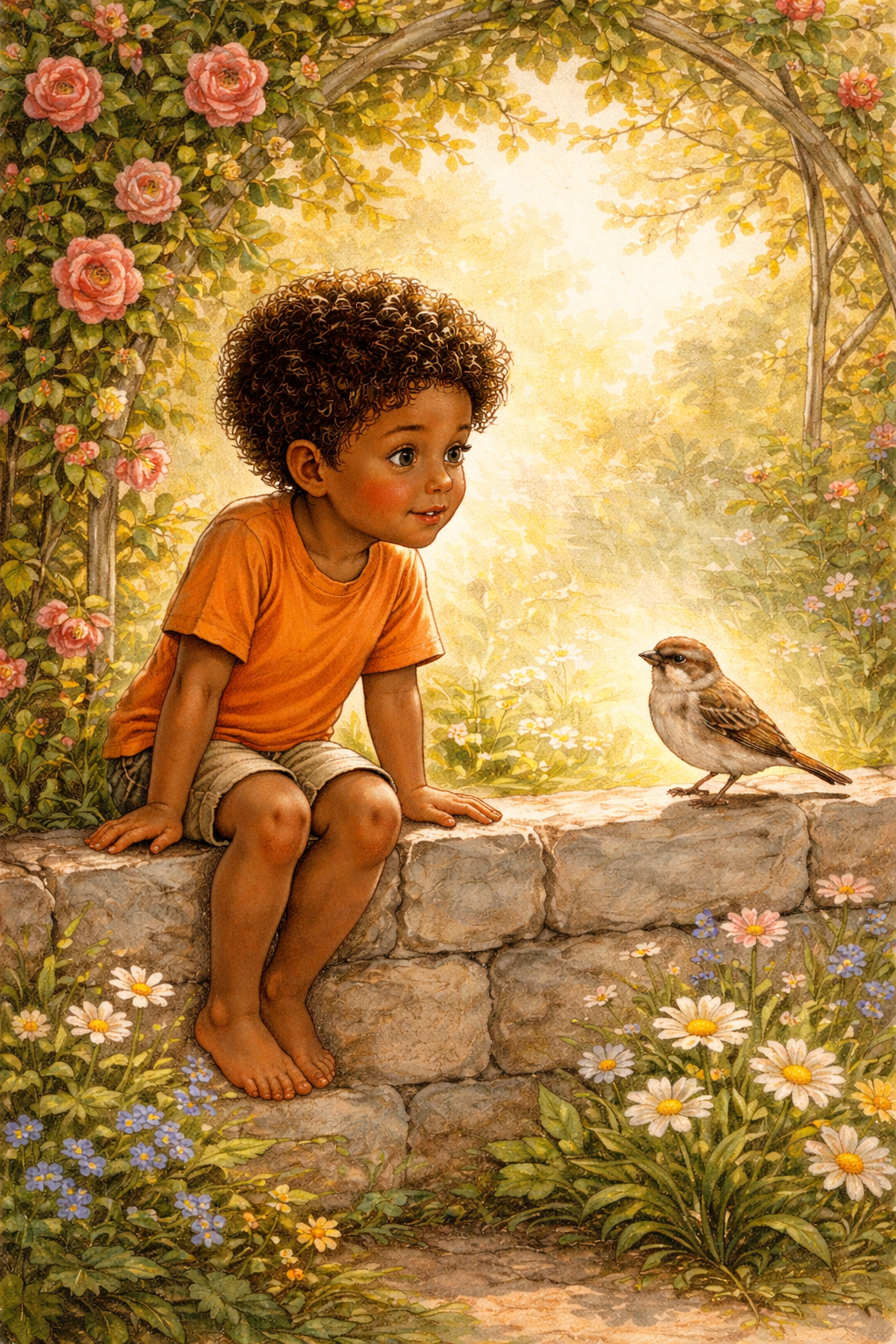
A child in a meadow wondering at creation
From Vol. I: the kindergartener's world of wonder — meadow, sparrow, the child's own body among them.

This year, we will learn about all of the amazing systems God put inside your body. Some of these systems include your bones (which hold you up), your muscles (which help you move), your heart and blood (which carry food and air to every part of you), and many more!

Think of your body like a beautiful house. God is the builder, and every room has a purpose. The bones are like the strong walls and frame. The skin is like the roof that protects everything inside. The heart is like a water pump that sends blood everywhere it needs to go. Everything works together because God made it that way!

“I praise thee, for thou art fearful and wonderful. Wonderful are thy works!”
Psalm 139:14 · RSV-CE · Memory verse of the week Pater · Latin, meaning Father. The opening word of the Pater Noster.

Key Terms

Body
The physical part of a person; a gift from God.
Head
The top part of your body that contains your brain and your five senses.
Trunk
The middle part of your body that holds your heart, lungs, and tummy.
Limbs
Your arms and legs, which help you move.
System
A group of body parts that work together as a team.

Socratic Questions

  1. Who made your body? What did God say about His creation?
  2. What are some amazing things your body can do?
  3. What is inside your trunk that beats all day and night?
  4. How can you use your body to show God’s love to others?
From the Instructor Guide

Five Days, at Home


The actual day-by-day plan from the Kindergarten Week 1 Instructor Guide. Each day is fifteen to twenty minutes. The opening prayer is the same every day.

“Pater, thank you for making me. Help me grow strong, kind, and holy.”
The Week’s Opening Prayer

I

Monday · Day One

Scripture & Mirror Game

Activities: Psalm 139:14 · Latin word Pater · mirror game.

Begin with the opening prayer. Read Psalm 139:14 aloud together. Discuss: God made you special and wonderful.

Introduce the Latin word Pater (Father). Have the child point upward while saying the word.

Mirror Game: Play a mirror game — point to head, heart, hands, and feet while naming each part.

Optional: trace the child’s body on large paper and label the parts together.

II

Tuesday · Day Two

Movement & the Whole Body

Activities: review verse · body-movement game.

Review Psalm 139:14 and practice Pater with upward hand motions.

Movement Game: Hop, clap, stretch, spin. Talk about how the whole body works together — one system, many parts.

III

Wednesday · Day Three

Global Connection & Self-Portrait

Activities: globe or pictures · self-portrait with labels.

Global Connection: Show a globe or pictures of children from different countries. Discuss: God made children everywhere with different sizes, colors, and features.

Self-Portrait: Have the child draw a self-portrait. Label eyes, nose, mouth, hands, feet.

IV

Thursday · Day Four

Review & Tracing Pater

Activities: review memory verse · trace the Latin word.

Review the memory verse and Pater with hand motions.

Tracing: Trace the word “Pater” on paper, in the air, and on the child’s hand.

V

Friday · Day Five

Worksheet & Celebration

Activities: color the child figure · circle three favorite parts · trace the sentence.

Worksheet: Complete the Week 1 Worksheet — color the child figure, circle three favorite body parts, trace the sentence.

Share: Share the finished work and celebrate the child’s creation.

Volume II · 1st Grade · Week 1 of 36

My Eyes — Seeing Goodness and Truth

The next year. Vol. II (My Body, God’s Design) spends the whole year on the eleven systems — one week, one part. The very first week looks at a single organ: the eye.

1

The Textbook Story

Let’s Learn About My Eyes

From Vitae II, 1st Grade, Week 1. Reading level bumps up, anatomy arrives.

Do you know how special your eyes are? Your eyes are one of God’s most amazing gifts! They help you see the beautiful world around you — the bright sun, colorful flowers, your family’s smiling faces, and so much more.

Inside your eye is something special called a pupil. That’s the dark circle in the middle of your eye. The pupil gets bigger when it’s dark and smaller when it’s bright. This helps just the right amount of light come into your eye so you can see clearly. How wonderful!

Light bounces off things and comes into your eye. Then, special cells in the back of your eye called the retina catch that light. Your retina sends a message to your brain, and your brain tells you what you’re seeing! It happens so fast — faster than you can blink!

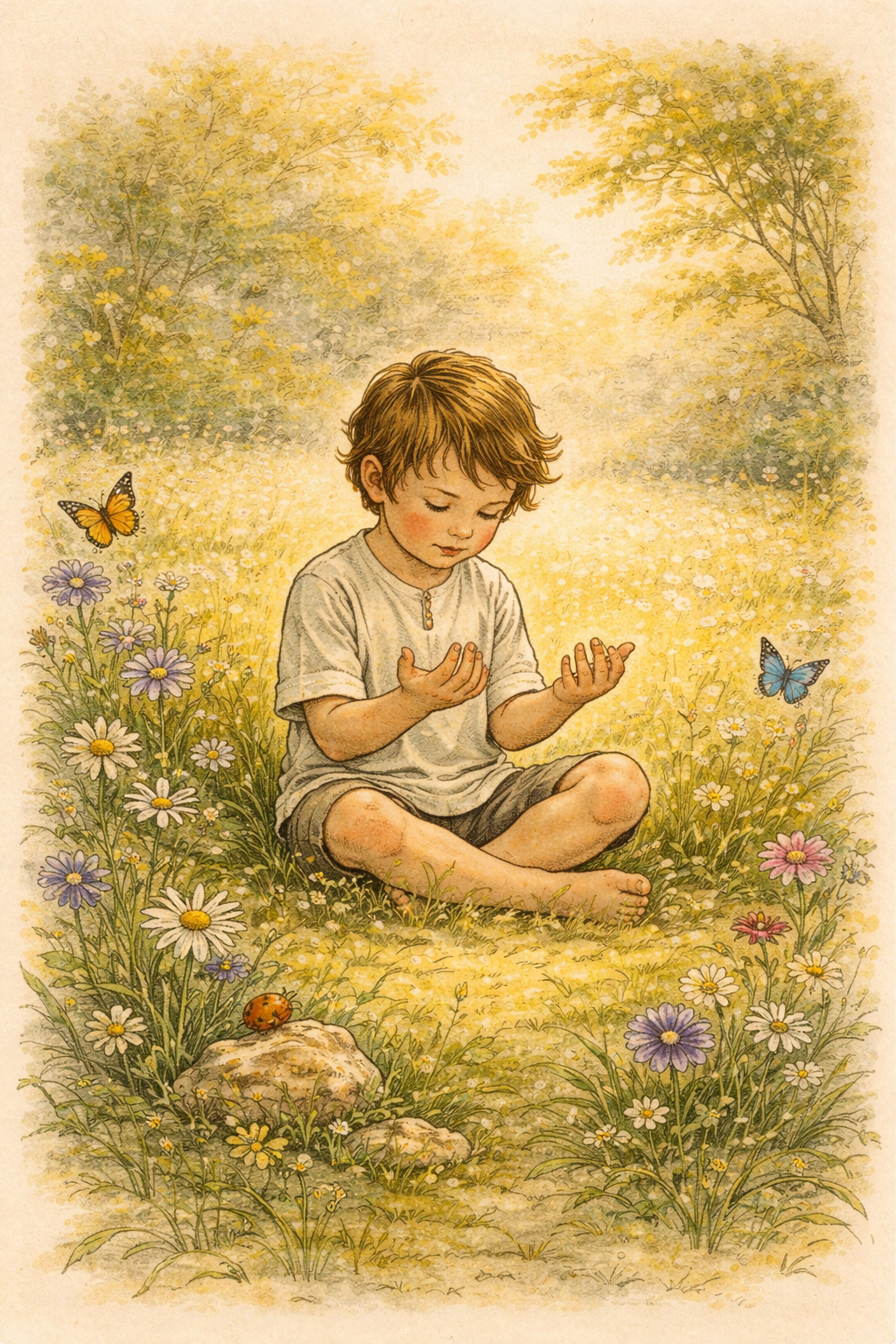
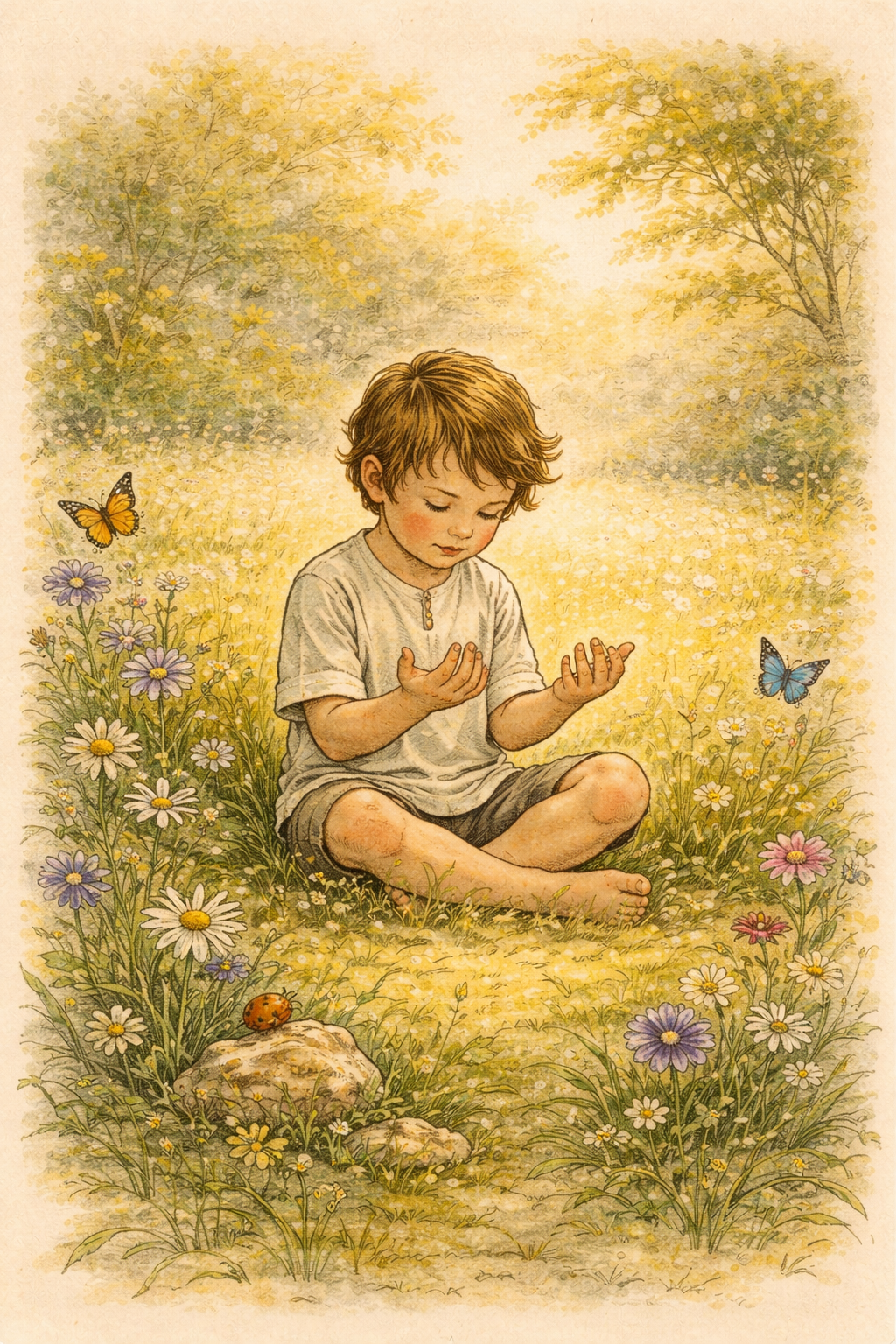
A child looking attentively at their hands, wondering
From Vol. II: the child learns the eye by looking with it. Anatomy as catechesis.

God made your eyes so you could see goodness and truth. You can see your parents’ love in their smiles. You can see God’s creation in nature. You can see the truth in the stories of the Bible. What a gift!

God’s Design

God designed your eyes with incredible purpose and love. When you look around and see beautiful things, you are experiencing God’s design. Your eyes help you connect with the world and with God. When we see someone smile or a sunrise, we are seeing God’s goodness. This is why it’s so important to care for our eyes and to use them to see and appreciate all of God’s wonderful creation.

Did You Know?

You blink about 15 to 20 times every minute! Blinking helps keep your eyes clean and healthy by spreading tears across them. Your tears aren’t just for crying — they clean your eyes and help them work properly.

“The light of the eyes rejoices the heart.”
Proverbs 15:30 · Memory verse Oculi · Latin, meaning Eyes. Pronunciation: OH-koo-lee.
How It Builds

Kindergarten to 12th Grade — One Argument


Kindergarten names the whole body — head, trunk, limbs — and calls it a gift. 1st Grade returns to one organ each week and teaches what it does and what it is for. 2nd Grade takes up nutrition and the six non-naturals of the Galenic tradition. 5th Grade teaches anatomy formally. 8th Grade reads the Theology of the Body at age-appropriate depth. 12th Grade defends a Christian bioethical claim. Twelve years. One argument. The body is given, made for goodness, and known through wonder first — then through study.

Child with Soli Deo Gloria tailpiece
Soli Deo Gloria · the tailpiece on every volume.
“Pied Beauty” · excerpt

Glory be to God for dappled things —   For skies of couple-colour as a brinded cow;     For rose-moles all in stipple upon trout that swim; Fresh-firecoal chestnut-falls; finches' wings;   Landscape plotted and pieced — fold, fallow, and plough;     And áll trádes, their gear and tackle and trim.

Gerard Manley Hopkins, SJ · 1877

Week 1, of thirty-six, of twelve volumes

This is one week of one volume. The whole Quintivium is a twelve-year argument about a child's body. Reserve it below.