A Christian school of health for every family
Book Consult
Pope St. John Paul II, 1979
Pope St. John Paul II · 1979
Catechesis I · St. John Paul II · 1979–1984

Theology of the Body

Theologia CorporisOne hundred twenty-nine Wednesday audiences, two parts, five cycles — an integrated catechesis on the human person.

“The body, and it alone, is capable of making visible what is invisible: the spiritual and the divine.” TOB 19:4 · 20 February 1980

Curated by Prof. Dana Rodriguez, PhD·A project of Vitae Catholica

A Note from the Curator

The Theology of the Body is an integrated Catholic anthropology delivered not as a treatise but as one hundred twenty-nine Wednesday general audiences between 5 September 1979 and 28 November 1984. This page is an attempt at the most comprehensive resource on that catechesis on the internet: every audience indexed, every core concept glossed, the strongest scholarship named, the common misunderstandings corrected, and the argument that the Theology of the Body has, finally, never only been about marriage.

Overture

What the Theology of the Body Is


At the beginning of his pontificate, barely a year before the assassination attempt that would nearly kill him, St. John Paul II announced an extended catechesis on what he called “the mystery of man.” The occasion was the ordinary Wednesday general audience, a weekly venue most popes use for brief pastoral reflections. John Paul II used it, instead, to deliver a sustained philosophical and theological treatise in one hundred and twenty-nine separate installments over five years. The catechesis is now widely known as the Theology of the Body, though strictly speaking the phrase is John Paul II's own description of the whole project rather than a title given to the text.

The canonical critical edition is Michael Waldstein's translation from the original Polish typescripts, Man and Woman He Created Them: A Theology of the Body (Pauline Books & Media, 2006). Waldstein reintegrates six catecheses composed but never delivered publicly — five on the Song of Songs, one on Tobit — which had previously been missing from English translations. His numbering system (TOB 1 through TOB 133, with each audience subdivided by paragraph for citation, e.g., TOB 15:1) is the scholarly standard. The delivered-audience count remains 129; the 133 figure includes the six restored from the Polish archive.

What the catechesis argues

The human body is not incidental to the human person. It is not a vehicle the soul rides inside. It is not a material container for a spiritual essence. It is the visible reality through which the person exists and through which the invisible mystery of God — the communion of the Trinity — is made visible in the created world. The body is, in this precise sensesacramental: it is a sign that makes present what it signifies. Everything John Paul II says about marriage, celibacy, procreation, sexuality, shame, suffering, the resurrection, and the Church follows from this central claim.

The argument proceeds by a specific method: John Paul II takes the words of Christ from four loci — the Genesis account Christ cites in Matthew 19 on marriage, the Sermon on the Mount on the heart, the resurrection catechesis in Matthew 22, and Paul's development of it in Ephesians 5 and Humanae Vitae — and treats each as an opening into the whole anthropology. The five cycles of the catechesis correspond to these four points of entry plus a final cycle integrating the Pauline Humanae Vitae teaching.

Why it still matters

Contemporary bioethical disputes — contraception, assisted reproduction, gender-affirming medicine, end-of-life decisions, the whole framework of reproductive choice — all presume a particular answer to the question what is a human body? Modern medicine has grown adept at altering the body and poor at saying what the body is for. Catholic moral teaching on these matters is often received as arbitrary prohibition. The Theology of the Body changes the register: it argues that Catholic teaching is not a list of rules but a set of implications from a single premise — the human body is the image of God made visible. Once the premise is granted, the teaching follows the way geometry follows from axioms. Once the premise is refused, no argument will persuade.

This page is for the reader who wants to encounter the catechesis seriously. Not a summary, not a popularization, not a controversy. The audiences themselves, their structural order, their scholarly apparatus, and the living tradition that has gathered around them for forty years.

Movement I · Architecture

The Two Parts & Five Cycles


Waldstein's critical edition organizes the 133 audiences into two parts and five cycles. The first part is “The Words of Christ” — three cycles on three of Christ's recorded teachings about the body. The second part, “The Sacrament,” is two cycles — on marriage as sacrament and on Humanae Vitae as its practical implication.

I
Part I · The Words of Christ · Cycle 1

Christ Appeals to “the Beginning”

Audiences TOB 1–23Scripture: Gen 1–4; Matt 19:3–81979–1980

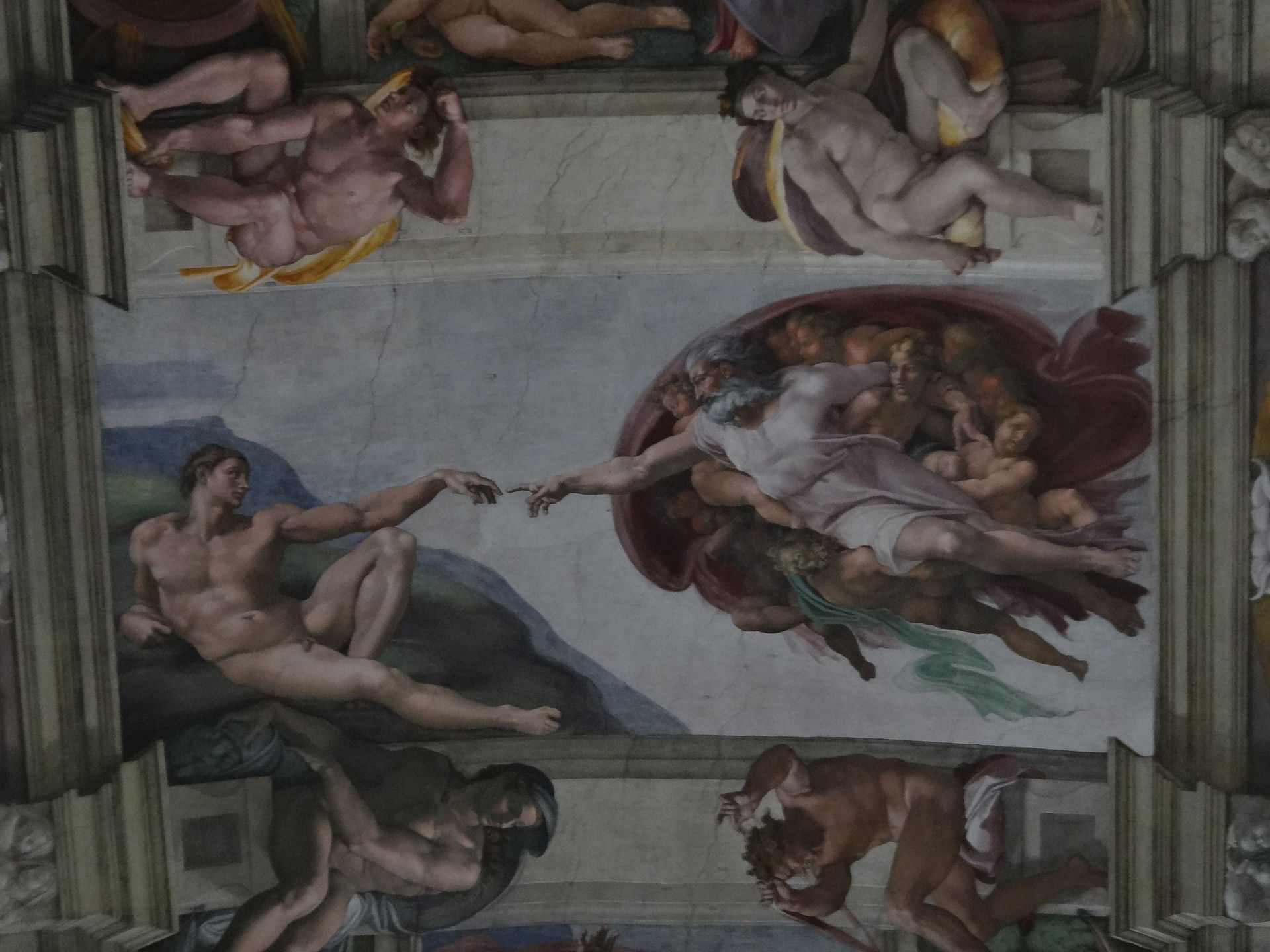
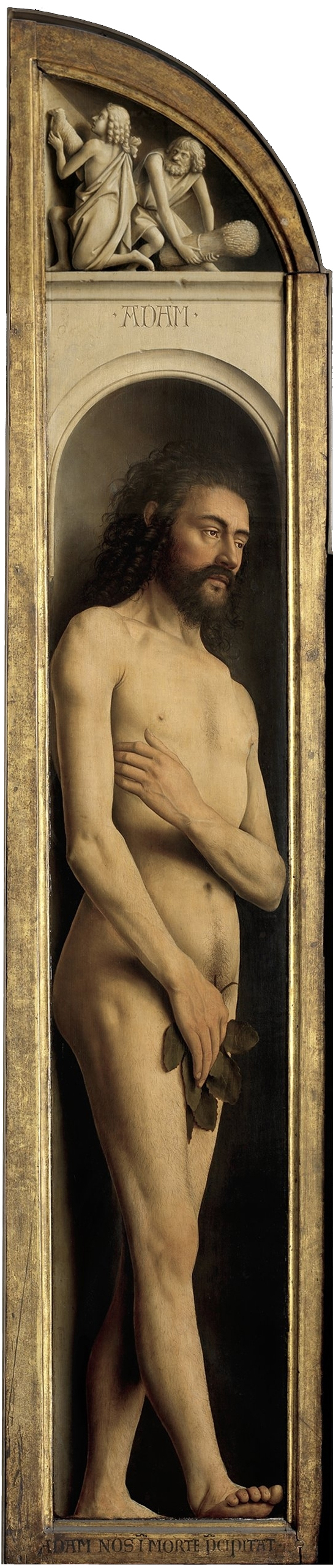
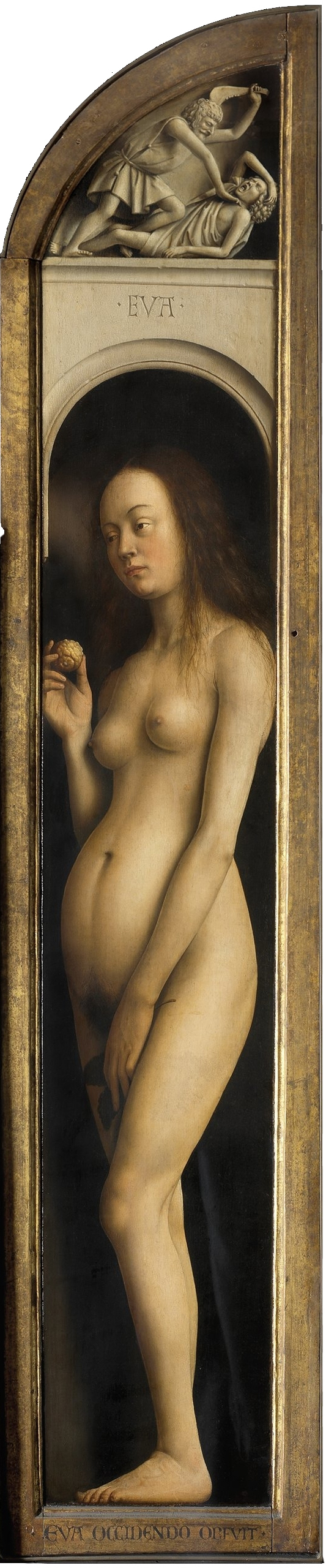
Christ, when questioned by the Pharisees about divorce, does not argue from current law. He “appeals to the beginning” — to the two Genesis creation accounts. John Paul II takes this appeal as methodological: the meaning of the human person is not extracted from historical experience under sin but read from creation itself. The cycle develops three “original experiences” of Adam before the Fall: original solitude (Adam alone before God, realizing he is different from the animals), original unity (the joyful recognition of Eve as “flesh of my flesh”), and original nakedness (being seen and seeing without shame).

  • Original solitude
  • Original unity
  • Original nakedness
  • Communion of persons
  • Nuptial meaning of the body
  • Freedom of the gift
  • Body as sacrament (primordial)
  • Masculinity and femininity
“The body reveals man... By means of its own visibility, it manifests man, and in manifesting him, acts as intermediary, that is, enables man and woman, from the very beginning, to 'communicate' with each other.” TOB 8 · 7 November 1979
II
Part I · The Words of Christ · Cycle 2

Christ Appeals to the Human Heart

Audiences TOB 24–63Scripture: Matt 5:27–28; Gal 5; 1 Cor 61980–1981

“Anyone who looks at a woman lustfully has already committed adultery with her in his heart.” John Paul II reads Christ's Sermon-on-the-Mount teaching as a diagnosis of the fallen heart. Concupiscence — the disordering of desire — is not a moral crime added to human nature; it is a deformation of the nuptial meaning of the body from within. The cycle turns then to St. Paul's description of life in the Spirit (Galatians 5) and the body as temple (1 Corinthians 6), and concludes with a reflection on the body's presence in art.

  • Concupiscence
  • The historical heart
  • Purity of heart (Matt 5:8)
  • Ethos of redemption
  • Spontaneity and virtue
  • Shame (concupiscent vs primordial)
  • Life according to the Spirit
  • The body and art
“The human heart has become a battlefield between love and lust. The more lust dominates the heart, the less it experiences the spousal meaning of the body.” TOB 32 · 23 July 1980
III
Part I · The Words of Christ · Cycle 3

Christ Appeals to the Resurrection

Audiences TOB 64–86Scripture: Matt 22:23–33; 1 Cor 151981–1982

Questioned by the Sadducees about a widow remarried seven times, Christ refuses the question's premise: “In the resurrection they neither marry nor are given in marriage, but are like angels in heaven.” John Paul II reads this not as the abolition of marriage in heaven but as the revelation of marriage's eschatological destination. The nuptial meaning of the body is not erased in the resurrection; it is fulfilled in the communion of the whole Church with Christ. The cycle then develops the vocation of continence for the Kingdom — celibacy as an eschatological sign that the body's nuptial meaning does not require marital expression in order to be honored.

  • Resurrection of the body
  • Redemption of the body
  • Eschatological communion
  • Virginity (original and eschatological)
  • Continence for the Kingdom
  • 1 Corinthians 7 — gift
  • Spiritualization without disembodiment
  • The theological body
“Continence 'for the sake of the kingdom of heaven' cannot be understood... unless in the broad and existential context of the revelation of the body.” TOB 75 · 24 March 1982
IV
Part II · The Sacrament · Cycle 4

The Sacramentality of Marriage

Audiences TOB 87–102Scripture: Ephesians 5:21–331982

St. Paul's “great mystery” (sacramentum magnum, Eph 5:32) — Christ and the Church as the fulfillment of “the two become one flesh” of Genesis 2:24 — is the hinge of the entire catechesis. Marriage in creation is already a sign (a primordial sacrament); marriage in the New Covenant is that same sign now joined to the reality it signifies, Christ's self-gift to the Church. The cycle unfolds the ecclesial, Christological, and redemptive dimensions of this one passage, and concludes that marriage as we know it is the matter of a sacrament that effects what it signifies.

  • Sacramentum magnum
  • The primordial sacrament
  • Christ and the Church as nuptial
  • Spousal analogy (Hosea to Ephesians)
  • Mutual submission “in reverence for Christ”
  • The sacrament as sign that effects
  • Redemption of the body through marriage
  • Marriage in the new sacramental economy
“Marriage corresponds to the vocation of Christians only when it mirrors the love that Christ, the Bridegroom, gives to the Church, his Bride.” TOB 93 · 8 September 1982
V
Part II · The Sacrament · Cycle 5

Love and Fruitfulness: Humanae Vitae and the Language of the Body

Audiences TOB 103–133Scripture: Song of Songs; Tobit; 1 Cor 71982–1984

The catechesis culminates in a re-reading of Paul VI's Humanae Vitae (1968). John Paul II argues that the encyclical's teaching — the inseparability of the unitive and procreative meanings of the conjugal act — is not an external rule imposed on the body but a fidelity to what the body already says. The body speaks a language. Sexual acts are propositions made in bodily language. Contraception is a deliberate falsification of that language; chastity is its truthful speech. Here sit the six restored audiences on the Song of Songs and Tobit — the great biblical love poem and the wedding-night prayer — that Waldstein added back to the canonical corpus.

  • Language of the body
  • Unitive and procreative significances
  • Responsible parenthood
  • Periodic continence as truth-telling
  • Song of Songs as nuptial mystery
  • Tobit's wedding night (TOB's prayer)
  • Prayer, penance, Eucharist as married spirituality
  • The conclusion: TOB as anthropology
“The language of the body, in order to be true, as conforming to the moral order, should signify not only the unitive aspect, but the procreative aspect, of marriage.” TOB 119 · 22 August 1984
From the First Letter to the Corinthians
“Do you not know that your body is a temple of the Holy Spirit within you, which you have from God? You are not your own; you were bought with a price. So glorify God in your body.”
1 Corinthians 6:19–20 · RSV-CE
Movement II · Vocabulary

Core Concepts of Adequate Anthropology


Twenty-eight terms. Each with the original Latin / Greek / Italian and a brief scholarly gloss. Click any highlighted Latin phrase to jump to the audience that introduces it.

Adequate anthropology

Antropologia adeguata

John Paul II's method of studying the human person: interior phenomenological experience integrated with objective Thomistic metaphysics. An “adequate” anthropology does not reduce the person to either subject or object, interior or exterior, soul or body.

Original solitude

Solitudo originaria

Adam's pre-Eve experience that he is different from the animals — a self-aware, free, rational subject standing before God. Solitude is not loneliness but the ontological ground of personhood.

Original unity

Unità originaria

Adam's joyful recognition of Eve as “flesh of my flesh” (Gen 2:23). The unity is bodily and spiritual at once: two embodied persons called to communio personarum.

Original nakedness

Nuditas originaria

The pre-lapsarian state in which “they were naked and were not ashamed” (Gen 2:25). Not mere absence of clothing but the fullness of seeing and being seen as gift, without self-appropriation.

Nuptial / spousal meaning of the body

Significato sponsale del corpo

The single most cited concept of the entire catechesis (TOB 15:1). The body's built-in capacity to express love as self-gift. Waldstein renders sponsale as “spousal” to capture the whole married life, not just the wedding.

Communion of persons

Communio personarum

A Trinitarian analogy: just as the divine Persons exist in communion, human persons are made for communion in mutual self-gift. Marriage is the primary natural icon; the Church is the redeemed icon.

Freedom of the gift

Libertà del dono

Not autonomy-from but self-possession-for: the capacity to give oneself. True freedom reaches its fullness in the disinterested gift of self (Gaudium et Spes 24).

Language of the body

Linguaggio del corpo

The body “speaks” truths about the person. Sexual acts are propositions made in bodily language. Contraception falsifies the language; chastity is its truthful speech (TOB 103–117).

Imago Dei

Image of God

Genesis 1:26–27 read with Genesis 2:24: man images God not primarily by rationality alone but by the communion of persons. Male and female together image God as Trinity.

Sacramentum / Primordial sacrament

Sign that makes visible

Creation itself, and specifically marriage in creation, is already a sign that makes visible the invisible mystery of God's love. Marriage in the New Covenant is the “great sacrament” (Eph 5:32).

Concupiscence / Lust

Concupiscentia

The disordering of desire that reduces the other to the object of use (1 John 2:16). Distinct from sexual attraction itself — TOB 40 is explicit that mutual attraction is not lust.

Shame (primordial vs. concupiscent)

Pudor originarius / concupiscens

Primordial shame is the original disinterested receptivity to the other as gift (no “shame” in Gen 2:25). Concupiscent shame after the Fall is the threefold shame of body, of the other-reduced-to-object, and of being exposed to that reducing gaze.

Redemption of the body

Redemptio corporis

Romans 8:23. The bodily dimension of eschatological hope: Christ redeems not just the soul but the whole embodied person.

Resurrection of the body

Resurrectio carnis

Matt 22, 1 Cor 15. The “spiritualization” of the body — not discarnate, but fully transparent to the love of the Trinity. Nuptial meaning reaches its eschatological fullness.

Continence for the Kingdom

Continenza per il regno

Matt 19:12, 1 Cor 7. A positive vocation in which the spousal meaning of the body is lived in direct self-gift to God and Church. Not against marriage but its eschatological sign.

Sacramentum magnum

The great mystery

Ephesians 5:32. The revelation that all creation ordered toward marriage was from the beginning ordered toward the marriage of Christ and the Church.

Homo sui iuris

The self-possessing person

Wojtyła's philosophical concept: the person capable of self-determination, which alone makes the sincere gift of self possible. From Osoba i czyn (1969).

Similitudo Dei

Likeness of God

For Wojtyła, the similitudo is achieved not only in imago (structural) but in actus (operative) — in concrete acts of self-gift.

Ethos of redemption

Ethos della redenzione

The concrete moral shape of life lived “in the Spirit” under the sign of Christ's redemptive victory. Ethos, not just rules; a whole formed mode of being.

Purity of heart

Beati mundo corde

Matt 5:8. Not mere avoidance of sexual sin but the positive disposition to see the other person as a revelation of God, never reducing body to object.

Masculinity & femininity

Maschilità / femminilità

Not reducible to biology alone, not merely cultural. Two irreducible and equally original modes of being a person, together imaging God. Developed further in Mulieris Dignitatem (1988).

Conjugal act

Actus conjugalis

The bodily act proper to spouses that, by its very structure, is ordered simultaneously to union and procreation. Humanae Vitae 12 holds these two “significations” inseparable.

Unitive and procreative significances

Inseparable significations

Not two rules but one structure of bodily self-gift: to give oneself fully is to be open to new life.

Virginity (ontological / eschatological)

Virginitas

The first meaning of the body at creation is virginal (Adam before Eve, Mary before Elizabeth). The eschatological meaning is virginal (Matt 22). Spousal meaning and virginal meaning are not opposed; the virginal is the horizon of the spousal.

Phenomenology (method)

Interior description

Husserlian and Schelerian philosophical method Wojtyła used to describe interior experience. TOB integrates phenomenology with Thomistic ontology.

Personalism

The personalistic norm

The philosophical tradition (Maritain, Mounier, Scheler, Wojtyła) that centers ethics on the irreducibility and dignity of the person. Wojtyła's norm: the person must never be merely a means, only an end.

The historical heart

Cor historicum

TOB 46. The real existing heart of man after sin and under grace: not the innocent heart of Eden, not a gnostic fantasy of disembodiment, but the heart being redeemed in Christ's victory over concupiscence.

Prophetism of the body

Profetismo del corpo

TOB 104–107. The body does not only speak the truth of spousal self-gift; it proclaims it. In marriage the spouses become ministers of this proclamation to one another and to the Church.
Movement III · The Complete Index

The 129 Wednesday Audiences


Delivered between 5 September 1979 and 28 November 1984. Organized here by Waldstein's five cycles. Click any cycle to expand; click an audience date to open the original on vatican.va.

Cycle 1 · Christ Appeals to “the Beginning”

TOB 1–23 · 1979–1980
15 Sep 1979Unity and indissolubility of marriageMatt 19:3–8
212 Sep 1979The biblical account of creation analyzedGen 1
319 Sep 1979Second creation account: subjective definition of manGen 2
426 Sep 1979Boundary between original innocence and redemptionGen 3; Rom 8
510 Oct 1979Meaning of man's original solitudeGen 2:18–20
624 Oct 1979Man's awareness of being a personGen 2
731 Oct 1979The alternative between death and immortalityGen 2:17
87 Nov 1979Original unity of man and womanGen 2:23–24
914 Nov 1979Communion of persons makes man the image of GodGen 1:27; 2:24
1021 Nov 1979Marriage one and indissoluble in GenesisGen 2:24
1112 Dec 1979Meaning of original human experiencesGen 2–3
1219 Dec 1979Fullness of interpersonal communicationGen 2:25
132 Jan 1980Creation as fundamental and original giftGen 1–2
149 Jan 1980Revelation and discovery of the nuptial meaning of the bodyGen 2:23–25
1516 Jan 1980Man-person becomes gift in freedom of loveGen 2:24; GS 24
1630 Jan 1980Mystery of man's original innocenceGen 2:25
176 Feb 1980Man and woman: mutual gift for each otherGen 2
1813 Feb 1980Original innocence and man's historical stateGen 3
1920 Feb 1980Body makes visible what is invisible (locus classicus)Gen 1–2
205 Mar 1980Analysis of knowledge and of procreationGen 4:1
2112 Mar 1980Mystery of woman revealed in motherhoodGen 4:1
2226 Mar 1980Knowledge-generation cycle and perspective of deathGen 4
232 Apr 1980Marriage in the integral vision of manGen 1–4 summary

Cycle 2 · Christ Appeals to the Human Heart

TOB 24–63 · 1980–1981
2416 Apr 1980Christ appeals to man's heartMatt 5:27–28
2523 Apr 1980“You shall not commit adultery”: ethical and anthropologicalEx 20:14
2630 Apr 1980Lust as fruit of breach of covenant with GodGen 3
2714 May 1980Real significance of original nakednessGen 2:25; 3:7
2828 May 1980Fundamental disquiet in all human existence1 John 2:16–17
294 Jun 1980Relationship of lust to communion of personsGen 3
3018 Jun 1980Dominion over the other in interpersonal relationGen 3:16
3125 Jun 1980Lust limits the nuptial meaning of the bodyGen 3
3223 Jul 1980The heart as battlefield between love and lustMatt 5:28
3330 Jul 1980Opposition in the human heart: spirit vs. bodyGal 5:17
346 Aug 1980Sermon on the Mount to men of our dayMatt 5
3513 Aug 1980Content of the commandment on adulteryMatt 5:27
3620 Aug 1980Adultery according to Law and ProphetsHos 1–3; Jer 3
3727 Aug 1980Adultery: breakdown of the personal covenantHosea
383 Sep 1980Adultery transferred from body to heartMatt 5:28
3910 Sep 1980Concupiscence as separation from matrimonial significanceMatt 5
4017 Sep 1980Mutual attraction differs from lustGen 2
4124 Sep 1980Depersonalizing effect of concupiscenceMatt 5
421 Oct 1980Establishing the ethical senseMatt 5
438 Oct 1980Interpreting the concept of concupiscence1 John 2
4415 Oct 1980Gospel values and duties of the human heartMatt 5
4522 Oct 1980Realization of the value of the body per Creator's planGen 1; Matt 5
4629 Oct 1980Power of redeeming completes power of creatingRom 8:23
475 Nov 1980Eros and ethos meet in the human heartMatt 5:8
4812 Nov 1980Spontaneity: mature result of conscienceMatt 5–7
493 Dec 1980Christ calls us to rediscover the new manMatt 5
5010 Dec 1980Purity of heartMatt 5:8
5117 Dec 1980Justification in ChristRom 3–8
527 Jan 1981Opposition between flesh and spiritGal 5
5314 Jan 1981Life in the Spirit based on true freedomGal 5:13
5428 Jan 1981Paul on sanctity and respect of the body1 Thess 4:3–5
554 Feb 1981Paul's description of the body and purity1 Cor 6:15–20
5611 Feb 1981Purity as fruit of life according to the Spirit1 Thess 4
5718 Mar 1981Pauline doctrine of purityGal 5
581 Apr 1981Positive function of purity of heartMatt 5:8
598 Apr 1981Magisterium applies Christ's words todayMatt 5; HV
6015 Apr 1981The human body, subject of works of artGen 1–2
6122 Apr 1981Ethos of the body in artistic cultureGeneral
6229 Apr 1981Art must not violate the right to privacyGeneral
636 May 1981Ethical responsibilities in artGeneral

Cycle 3 · Christ Appeals to the Resurrection

TOB 64–86 · 1981–1982
6411 Nov 1981Marriage and celibacy in light of resurrection of the bodyMatt 22:23–33
6518 Nov 1981The living God continually renews lifeMatt 22:32
662 Dec 1981Resurrection and theological anthropologyMatt 22
679 Dec 1981The resurrection perfects the personMatt 22; Luke 20
6816 Dec 1981Christ's words on resurrection complete revelation of the bodyMark 12
6913 Jan 1982New threshold of complete truth about manMatt 22
7027 Jan 1982Doctrine of the resurrection according to St. Paul1 Cor 15
713 Feb 1982Risen body: incorruptible, glorious, dynamic, spiritual1 Cor 15:42–49
7210 Feb 1982Body's spiritualization: source of power and incorruptibility1 Cor 15:44
7310 Mar 1982Virginity or celibacy for the sake of the KingdomMatt 19:12
7417 Mar 1982Vocation to continence in earthly lifeMatt 19:10–12
7524 Mar 1982Continence for the Kingdom meant to have spiritual fulfillmentMatt 19
7631 Mar 1982Effective and privileged way of continenceMatt 19
777 Apr 1982Superiority of continence does not devalue marriage1 Cor 7
7814 Apr 1982Marriage and continence complement each other1 Cor 7
7921 Apr 1982Value of continence is found in love1 Cor 7
8028 Apr 1982Celibacy as response to love of the Divine Spouse1 Cor 7:32–35
815 May 1982Celibacy for the Kingdom affirms marriageMatt 19; 1 Cor 7
8223 Jun 1982Voluntary continence derives from counsel, not command1 Cor 7
8330 Jun 1982Unmarried person anxious to please the Lord1 Cor 7:32
847 Jul 1982Each has his own gift suited to his vocation1 Cor 7:7
8514 Jul 1982The Kingdom, not the world, is man's eternal destiny1 Cor 7:29–31
8621 Jul 1982Mystery of body's redemption: basis for marriage & continenceRom 8

Cycle 4 · The Sacramentality of Marriage

TOB 87–102 · 1982
8728 Jul 1982Marital love reflects God's love for his peopleEph 5
884 Aug 1982Call to imitate God and to walk in loveEph 5:1–2
8911 Aug 1982Reverence for Christ: basis of the relationship between spousesEph 5:21
9018 Aug 1982Deeper understanding of Church and marriageEph 5:22–33
9125 Aug 1982Paul's analogy of the union of head and bodyEph 5:23
921 Sep 1982Sacredness of the human body and marriageEph 5:29
938 Sep 1982Christ's redemptive love has spousal natureEph 5:25–27
9415 Sep 1982Moral aspects of the Christian's vocationEph 5
9522 Sep 1982Christ-Church relation rooted in prophetic traditionIsa 54; Hos 2
9629 Sep 1982Analogy of spousal love: radical character of graceEph 5
976 Oct 1982Marriage: central point of the sacrament of creationGen 2:24; Eph 5
9813 Oct 1982Loss of original sacrament restored in marriage-redemptionEph 5
9920 Oct 1982Marriage integral part of new sacramental economyEph 5
10027 Oct 1982Indissolubility of marriage in the mystery of redemptionEph 5
10124 Nov 1982Christ opened marriage to the saving action of GodEph 5
1021 Dec 1982Marriage sacrament: effective sign of God's saving powerEph 5

Cycle 5 · Love and Fruitfulness: Humanae Vitae and the Language of the Body

TOB 103–133 · 1982–1984
10315 Dec 1982Redemptive and spousal dimensions of loveEph 5
1045 Jan 1983Substratum and content of the sacramental signEph 5
10512 Jan 1983Language of the body in the structure of marriageGen 2:24
10619 Jan 1983The sacramental covenant in the dimension of signMal 2:14
10726 Jan 1983Language of the body strengthens the marriage covenantMatt 5; Eph 5
108–1171983Song of Songs + Tobit (six restored audiences in Waldstein's edition)Song; Tobit 6–8
11811 Jul 1984Morality of the marriage actHV 11–12
11922 Aug 1984HV from natural law and revealed order; language of body (locus)HV 4, 11
12028 Aug 1984Discipline that ennobles human loveHV 21
1215 Sep 1984Responsible parenthood linked to moral maturityHV
1223 Oct 1984Prayer, penance, Eucharist: sources of married spiritualityHV
12310 Oct 1984Power of love given to man and womanRom 5:5
12424 Oct 1984Continence protects the dignity of the conjugal actHV
12531 Oct 1984Continence frees one from inner tensionHV
1267 Nov 1984Continence deepens personal communionHV
12714 Nov 1984Christian spirituality of marriage, living in the SpiritGal 5
12821 Nov 1984Respect for the work of GodHV
12928 Nov 1984Redemption of the body and sacramentality of marriage (conclusion)Rom 8; Eph 5
Movement IV · The Bible in TOB

Scripture Index


Ten passages most engaged across the catechesis — each with the audiences that engage it and a one-sentence note on why it matters to TOB's argument.

Matthew 19:3–8

TOB 1, 2, 10, 73–77

Christ “appeals to the beginning.” The founding text — Christ's own hermeneutic governs TOB's method.

Genesis 1:26–27

TOB 2, 9, 14, 15

Created in God's image, male and female. The imago Dei as communion of persons.

Genesis 2:18–25

TOB 3–13, 19, 27

Solitude, unity, nakedness. Source of the three “original experiences.”

Genesis 2:24 — “one flesh”

TOB 10, 17, 87, 97, 103

Cited by Christ (Matt 19), by Paul (Eph 5). The primordial sacramental text.

Matthew 5:27–28

TOB 24–45

Sermon on the Mount. Founding text of Cycle 2 — the whole catechesis on concupiscence and the heart.

Matthew 22:23–33

TOB 64–69, 73

No marriage in the resurrection. The eschatological horizon of TOB.

1 Corinthians 7

TOB 77–86

Pauline basis of Cycle 3/4 on celibacy for the Kingdom.

1 Corinthians 15:42–49

TOB 70–72

Sown in weakness, raised in power. Pauline eschatology of the body.

Ephesians 5:21–33

TOB 87–102

Spouses and Christ / Church. Governing text of Cycle 4 — the sacramentality of marriage.

1 John 2:15–17

TOB 26, 28, 41–43

The threefold concupiscence. Defines the anatomy of lust.

Movement V · The Argument for Catholic Medicine

The Theology of the Body and Medicine


Natural-law moral reasoning (Veritatis Splendor 48–50) supplies the objective ground: the structure of the human person and human act determines moral truth. The Theology of the Body supplies the interior and anthropological ground: why that objective structure is also the fulfillment of the person, not a constraint upon her. This matters enormously in medicine, where patients often experience Church teaching as mere prohibition.

Three arguments TOB makes that natural law alone cannot

First: the body is not a machine to be managed, and biology is not separable from biography. TOB rejects the Cartesian dualism that treats the body as a possession of the self rather than the self's own visible mode of existence. This directly grounds the Ethical and Religious Directives for Catholic Health Care Services (6th ed., 2018) in a way natural-law reasoning alone cannot — why a patient's dignity does not fluctuate with her cognitive state, why mutilation is different from therapy, why fertility is integral rather than a function to be switched on and off.

Second: the conjugal act speaks a bodily language that reproductive technologies cannot substitute. Donum Vitae (1987) and Dignitas Personae (2008) hold that IVF, heterologous insemination, embryo freezing, pre-implantation diagnosis, and embryo reduction are morally impermissible because they separate the generation of new human life from the personal conjugal act in which life belongs. TOB grounds this by showing that the conjugal act is not merely a biological cause of conception but the bodily self-gift of the spouses, which is the only personally proportionate matrix for the coming-to-be of a new person. When procreation is detached from the conjugal act, the child is made rather than begotten — reduced from gift to product. This is a specifically TOB argument, unavailable from natural law alone.

Third: suffering, disability, and dying have spousal meaning too. TOB's insistence that the body makes visible the invisible gives theological warrant for Samaritanus Bonus (CDF, 2020) on end-of-life care. Even the broken, dying body continues to speak love in offering itself; euthanasia is a falsification of the language of the body in its eschatological register, just as contraception is a falsification in its generative register.

The argument Vitae makes to its patients

Catholic medicine is not a collection of prohibitions appended to modern biomedicine. It is the recognition that the human body is not a machine you have, but the visible form of the person you are. When we care for bodies, we care for persons. When we refuse to separate the unitive from the procreative in the conjugal act, or to substitute laboratory manufacture for conjugal begetting, or to end a life we think has ceased to be worth living, we are not imposing rules — we are refusing to lie about what a human being is. The Theology of the Body gives us the positive vision of the person that all of our clinical standards presuppose. This is why our pediatric practice is what it is, and why The Quintivium teaches health the way it does.
Prof. Dana Rodriguez, PhD · Vitae Catholica
Movement VI · Three Paths

How to Read the Theology of the Body


Three honest paths, calibrated to the reader's time and background. There is no shame in any of them.

Path I · Beginner

One Evening In

Read Waldstein's 28-page foreword to Man and Woman He Created Them. Then read TOB 15, 19, and 46 only — three audiences, an hour's reading — to meet the core ideas of spousal meaning, the body as sacrament, and the ethos of redemption.

  • Waldstein 2006, Foreword (pp. 1–23)
  • TOB 15:1 — the spousal meaning defined
  • TOB 19:4 — the body makes visible what is invisible
  • TOB 46 — the ethos of redemption
Path II · Intermediate

Three Months Through

Read Waldstein's full 128-page introduction plus one cycle per three weeks, pausing to reread the Scripture passages Christ cites. Add John Grabowski's Sex and Virtue (CUA Press, 2003) as a moral-theology companion.

  • Waldstein 2006, full introduction
  • All five cycles, one at a time
  • Grabowski, Sex and Virtue
  • Mary Healy, Men and Women Are from Eden (study guide)
Path III · Advanced

Graduate Study

Waldstein + Wojtyła's pre-papal Love and Responsibility and The Acting Person. Then Angelo Scola's The Nuptial Mystery (Eerdmans, 2005) and Kenneth Schmitz's At the Center of the Human Drama (CUA Press, 1993). Read the West-Schindler-Waldstein debate essays in full. Consider formal coursework at the Pontifical John Paul II Institute (Washington, DC) or the Theology of the Body Institute.

  • Waldstein 2006, complete
  • Wojtyła, Love and Responsibility (Ignatik trans., 2013)
  • Scola, The Nuptial Mystery
  • Schmitz, At the Center of the Human Drama
  • Communio archive: Schindler 2009 critique + responses
Movement VII · Sources

Primary Sources


The critical edition

Waldstein, Michael, ed. and trans. Man and Woman He Created Them: A Theology of the Body. Boston: Pauline Books & Media, 2006. ISBN 978-0-8198-7421-4. The definitive English edition with a 128-page scholarly introduction, the six undelivered audiences restored from the Polish archive, and Waldstein's TOB numbering (1–133). Pauline Books.

The audiences on vatican.va (official)

The complete audience archive is available by year at https://www.vatican.va/content/john-paul-ii/en/audiences/{year}.index.html. Individual audiences follow the pattern .../audiences/{year}/documents/hf_jp-ii_aud_{yyyymmdd}.html. For example, the 20 February 1980 audience (TOB 19) is at vatican.va · 19800220.

Wojtyła's pre-papal works (foundational)

Wojtyła, Karol. Love and Responsibility. Trans. Grzegorz Ignatik. Boston: Pauline, 2013 (revised edition of the 1960 Polish original, Miłość i odpowiedzialność). The foundational text for TOB's personalist norm. Pauline · WorldCat.

Wojtyła, Karol. The Acting Person. Trans. Andrzej Potocki. Dordrecht: Reidel, 1979 (Polish original Osoba i czyn, 1969). Philosophical foundation of Wojtyła's personalism. WorldCat.

Wojtyła, Karol. Sources of Renewal: The Implementation of Vatican II. Trans. P. S. Falla. San Francisco: Harper & Row, 1980 (Polish original 1972). Programmatic reading of Vatican II. WorldCat.

Wojtyła, Karol. Person and Community: Selected Essays. Trans. Theresa Sandok. New York: Peter Lang, 1993. Includes “The Personalistic Norm” and “Subjectivity and the Irreducible in Man.” WorldCat.

Major companion magisterial documents of the pontificate

John Paul II. Redemptor Hominis (1979) · Dives in Misericordia (1980) · Familiaris Consortio (1981) · Mulieris Dignitatem (1988) · Veritatis Splendor (1993) · Letter to Families / Gratissimam Sane (1994) · Letter to Women (1995) · Evangelium Vitae (1995).

Magisterial context TOB presumes

Paul VI. Humanae Vitae (1968). The encyclical Cycle 5 of TOB is, in substantial part, written to vindicate.

Second Vatican Council. Gaudium et Spes (1965), especially §§12, 22, 24, 48–50. §24 (“man…the only creature that God willed for his own sake”) is the single most cited Conciliar passage in TOB.

CDF. Persona Humana (1975) · Donum Vitae (1987) · Dignitas Personae (2008) · Samaritanus Bonus (2020).

Catechism of the Catholic Church (1992; revised 1997). §§355–384 (man in God's image); §§1601–1666 (sacrament of matrimony); §§2331–2400 (the sixth and ninth commandments).

Movement VIII · Scholarship

Secondary Sources


Foundational interpretive works

Waldstein, Michael. “Introduction to the Theology of the Body,” in Man and Woman He Created Them (2006), pp. 1–128. The indispensable scholarly guide; argues TOB is a deliberate counter to Baconian dominative epistemology.

Scola, Angelo (Cardinal). The Nuptial Mystery. Grand Rapids: Eerdmans, 2005 (Ressourcement series). Argues that sexual difference is at the heart of imago Dei; develops TOB via Balthasar.

Schmitz, Kenneth L. At the Center of the Human Drama: The Philosophy of Karol Wojtyła / Pope John Paul II. Washington: CUA Press, 1993 (McGivney Lectures). The definitive philosophical genealogy of Wojtyła's personalism.

Moral theology and sexual ethics in the TOB line

Grabowski, John S. Sex and Virtue: An Introduction to Sexual Ethics. Washington: CUA Press, 2003. Reconstructs Catholic sexual morality on covenant / discipleship / beatitude lines drawing deeply on TOB.

Asci, Donald P. The Conjugal Act as Personal Act. San Francisco: Ignatius, 2002. The most rigorous TOB-inflected moral-theological treatment of the conjugal act.

Smith, Janet E. Humanae Vitae: A Generation Later. Washington: CUA Press, 1991; Why Humanae Vitae Was Right: A Reader (ed.), San Francisco: Ignatius, 1993. The premier scholarly defender of Humanae Vitae.

The Rome / CUA John Paul II Institute school

Melina, Livio. Sharing in Christ's Virtues (CUA Press, 2001); The Epiphany of Love (Eerdmans, 2010); Building a Culture of the Family (Alba House, 2011).

Granados, José, DCJM. Introduction to Sacramental Theology (CUA Press, 2020); numerous essays in Communio.

Pérez-Soba, Juan José. The Source of Certainty: On the Moral Knowledge of the Acting Person (collections forthcoming in English).

Kampowski, Stephan. Embracing Our Finitude (Wipf & Stock, 2018); extensive Communio essays.

Biblical theology and accessible scholarship

Healy, Mary. Men and Women Are from Eden: A Study Guide to John Paul II's Theology of the Body. Revised ed. Cincinnati: Franciscan Media, 2023. The most widely used scholarly-but-accessible study guide.

Allen, Prudence, RSM. The Concept of Woman, 3 vols. Grand Rapids: Eerdmans, 1985–2016. Massive philosophical history of the concept of woman; complementary to TOB.

Schumacher, Michele M. (ed.) Women in Christ: Toward a New Feminism. Grand Rapids: Eerdmans, 2004.

Popularization and its debate

West, Christopher. Theology of the Body Explained. Revised ed. Boston: Pauline, 2007. Theology of the Body for Beginners. Revised ed. Ascension, 2009. The most widely known popularization. Read with care and alongside the critical responses below.

Schindler, David L. “Christopher West's Theology of the Body: A Critical Reflection.” Communio, 2009. The benchmark academic challenge to West's earlier popularizations; three specific critiques (concupiscence, analogy, the Marian dimension).

Waldstein, Michael. Published responses in Catholic News Agency and Crisis, 2009. Waldstein defends the substance of West's work while acknowledging tonal revisions had been appropriate, and argues that West has grown.

von Hildebrand, Alice. “Dietrich von Hildebrand, Catholic Philosopher, and Christopher West, Modern Enthusiast: Two Very Different Approaches to Love, Marriage, and Sex.” Catholic News Agency, 2009.

A responsible TOB resource names this debate and links both sides. It is a debate within Catholic orthodoxy; the dispute is about prudence in presentation, not about the deposit of faith.

Movement IX · Study Communities

Institutes & Formation Programs


Where to study TOB seriously — from parish-level formation to pontifical doctorate.

Washington, DC

Pontifical John Paul II Institute for Studies on Marriage & Family

On the Catholic University of America campus. The U.S. session that retained the original Wojtyłan mission. Degrees: MTS, STL, STD, PhD.

johnpaulii.edu
Rome

Pontifical Theological Institute, Rome

The founding 1981 Roman institute. Restructured 2019. International sessions on five continents.

istitutogp2.it
Quakertown, PA

Theology of the Body Institute (TOBI)

Founded by Christopher West, Th.D. Three-course Certification Program (TOB I–III) plus specialty courses. Partners with Pontifex University for an MA.

tobinstitute.org
Cincinnati, OH

Ruah Woods Institute

K–12 TOB curriculum (“Rooted”), teacher training, psychological services, adult formation. The most developed K–12 TOB curriculum for Catholic schools in the U.S.

ruahwoodsinstitute.org
Irving, TX

Theology of the Body Evangelization Team (TOBET)

K–8 curriculum “The Body Matters,” parish retreats, marriage prep.

tobet.org
Princeton, NJ

Love and Fidelity Network

College-level formation. Annual “Sexuality, Integrity, and the University” conference.

loveandfidelity.org
International

Veritas Amoris Project

International research circle continuing the Melina / Granados / Pérez-Soba line after the 2019 Rome restructure.

veritasamoris.org
USA

USCCB — TOB resources

Official USCCB overview page. Useful as a starting point and for links to diocesan programs.

usccb.org / TOB
USA

Culture Project International

Teen and young-adult formation focused on restoring culture through sexual integrity.

restoreculture.com
Movement X · Clarifications

Common Misunderstandings


Six errors that keep TOB from being read well. Each answered briefly from the catechesis itself.

Is the Theology of the Body just a Catholic sex manual?

No. The catechesis addresses being a body at all (original solitude), being made for communion (original unity), the eschatological destiny of the body (resurrection), and celibacy for the Kingdom — not only married sexuality. Waldstein observes that the body's original meaning at creation is virginal (Adam before Eve, Mary before Elizabeth) and its final meaning in heaven is virginal (Matt 22). The spousal meaning is framed on both sides by the virginal. Treating TOB as exclusively a sexual ethics is to miss four-fifths of it.

Does the spousal meaning of the body apply only to married people?

No. TOB 15:1 defines the spousal meaning as “the power to express love: precisely that love in which the human person becomes a gift.” Every human being — celibate, married, single, widowed, consecrated — is called to this self-gift. Marriage is one concrete actualization; consecrated celibacy is another; ordinary friendship and work are ordered to self-gift as well. The fourteen audiences on continence for the Kingdom (73–86) explicitly affirm that celibacy lives out the spousal meaning of the body in a particular eschatological mode.

Does TOB replace the Catechism?

No. TOB is a catechesis by a single pope in a Wednesday-audience genre. The Catechism of the Catholic Church (1992) is the universal doctrinal synthesis. TOB develops, enriches, and grounds doctrine already present in the Catechism (especially CCC 355–384 on the human person and 2331–2400 on the sixth commandment). TOB is a way of seeing the deposit of faith, not a new deposit.

Is TOB in tension with natural law?

No; the two are complementary. John Paul II in Veritatis Splendor reaffirms natural law as objectively binding and accessible to reason. TOB supplies natural law's interior-personal grounding: why the objective moral order is experienced as true to the person. Natural law says “the procreative and unitive meanings are inseparable”; TOB says “because the language of the body must not lie.”

Why have some popularizations drawn academic critique?

The 2009 debate (Schindler vs. West, with Alice von Hildebrand, Waldstein, and Janet Smith weighing in) centered on four concerns: (1) whether early popularizations underplayed the durability of concupiscence; (2) whether vivid sexual imagery to explain Trinitarian realities collapsed the analogical “ever greater dissimilarity” the Fourth Lateran Council (1215) requires; (3) the relative absence of Mary; (4) whether TOB was presented as revolution or as continuity. The debate is within Catholic orthodoxy; both parties affirm magisterial teaching. A responsible TOB resource names the debate, links both sides, and does not uncritically present any single popularizer as the definitive voice.

Does TOB require knowledge of Husserl / phenomenology to read responsibly?

You can read TOB profitably without any phenomenological background — John Paul II writes in a pastoral register and anchors nearly every move in Scripture. But to understand why TOB is structured the way it is (starting with interior experience of original solitude rather than with biological teleology), it helps to know that Wojtyła is fusing phenomenology (Husserl, Scheler) with Thomistic metaphysics. Without that frame, readers sometimes mistake TOB for a purely experiential treatise. Schmitz's At the Center of the Human Drama and Waldstein's introduction are the two indispensable guides.

Movement XI · Video Library

Curated Videos


Ten curated video lectures from serious TOB teachers and scholars. Lazy-loaded below; click any thumbnail to play.

TOB Crash Course: From the Beginning

Fr. Mike Schmitz

Ascension Presents · 59 min

What Is Theology of the Body?

Christopher West, Th.D.

Theology of the Body Institute · 12 min

A Lecture by Michael Waldstein

Prof. Michael Waldstein

International Institute for Culture · 24 min

Theology of the Body 101

Prof. Angela Franks

Catholic Answers Live · 39 min

Von Euw Lecture: Body & Identity

Prof. Angela Franks

Saint John's Seminary · 77 min

TOB & Humanae Vitae Panel

Waldstein + Franciscan theologians

Franciscan University · 58 min

Legacy of JPII's Theology of the Body

EWTN editorial

EWTN · 7 min

The Sacrament of Marriage

Bishop Robert Barron

Word on Fire · 8 min

The Human Body: A Gospel in the Flesh

Christopher West with Word on Fire

Word on Fire Institute · 79 min

Theology of the Body (full lecture)

Christopher West, Th.D.

Parousia Media · 55 min

From “As Kingfishers Catch Fire”

I say móre: the just man justices; Keeps gráce: thát keeps all his goings graces;   Acts in God's eye what in God's eye he is —   Chríst — for Christ plays in ten thousand places, Lovely in limbs, and lovely in eyes not his To the Father through the features of men's faces.

Gerard Manley Hopkins, SJ · c. 1877

From the catechesis to the classroom

The Theology of the Body is the intellectual spine of Vitae Formation. Read our K–12 curriculum, the Quintivium, or our companion resource on Natural Family Planning.